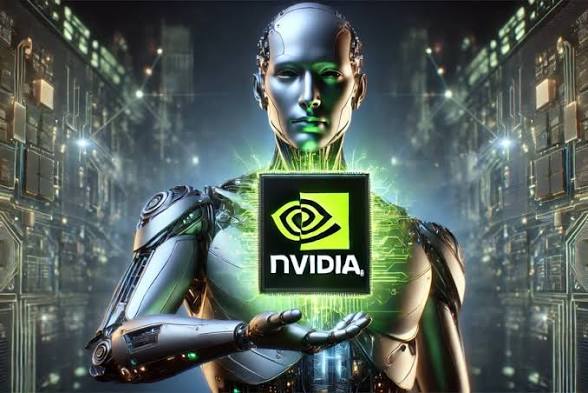
How NVIDIA Continues to Rule the AI Industry in 2026
Artificial intelligence is growing faster than almost anyone expected. From AI chatbots and smart assistants to robotics and autonomous vehicles, AI is becoming part of everyday life. Behind many of these breakthroughs stands one company that continues to dominate the global AI industry — NVIDIA.
A few years ago, NVIDIA was mostly known for gaming graphics cards. Today, it has evolved into one of the most influential technology companies in the world. Whether it is AI model training, cloud infrastructure, robotics, or enterprise automation, NVIDIA hardware powers much of the modern AI ecosystem.
Companies building advanced AI systems — including OpenAI, Microsoft, Google, Amazon, and Meta — depend heavily on NVIDIA GPUs and AI platforms.
The company’s success did not happen overnight. NVIDIA spent years investing in GPU computing, AI software, developer ecosystems, and data-center technologies long before artificial intelligence became mainstream. In 2026, those early investments are paying off at a massive scale.
NVIDIA’s Journey From Gaming to AI Leadership
NVIDIA was founded in 1993 by Jensen Huang and his co-founders. During its early years, the company focused mainly on graphics processing units (GPUs) designed for PC gaming.
Gamers loved NVIDIA hardware because it delivered smoother graphics and better gaming performance. However, researchers later discovered something even more valuable — GPUs were incredibly efficient at handling artificial intelligence workloads.
Unlike traditional CPUs, GPUs can process thousands of calculations simultaneously. This makes them ideal for training AI models that require enormous amounts of computing power.
When deep learning started gaining momentum around 2012, NVIDIA was already prepared with powerful GPU architecture and developer tools.
That timing changed the company’s future forever.
Today, NVIDIA technology powers many of the world’s largest AI systems.
Why NVIDIA Continues to Lead the AI Market
Advanced AI Chips
One of the biggest reasons behind NVIDIA’s dominance is its powerful AI hardware.
Modern AI systems require enormous computational resources. Training large language models can take weeks or months while using thousands of GPUs simultaneously.
NVIDIA designs chips specifically optimized for these workloads.
Some of the company’s most popular AI products include:
- H100 Tensor Core GPUs
- Blackwell AI GPUs
- Grace Hopper Superchips
- DGX AI Systems
These processors are widely used across the AI industry by major cloud providers and AI research organizations.
Industry analysts estimate that NVIDIA controls a significant portion of the global AI accelerator market, giving the company a major advantage over competitors.
CUDA: NVIDIA’s Biggest Competitive Advantage
Another major reason developers remain loyal to NVIDIA is CUDA.
CUDA is NVIDIA’s software platform that enables developers to use GPUs for AI, machine learning, simulations, scientific computing, and high-performance workloads.
Although AI hardware is important, software ecosystems often determine long-term industry leadership.
Over the years, millions of developers have built applications using CUDA. As a result, businesses using NVIDIA hardware can scale AI projects more easily without rebuilding their infrastructure.
Competitors such as AMD and Intel continue improving their AI hardware, but NVIDIA’s software ecosystem remains one of its strongest advantages.
For many enterprises, switching away from CUDA would require significant redevelopment costs and technical changes.
GTC 2026 Revealed NVIDIA’s Bigger Vision
NVIDIA’s annual AI conference, GTC 2026, has become one of the most important technology events in the world.
During the event, CEO Jensen Huang emphasized that NVIDIA is no longer thinking only about GPUs.
The company showcased technologies focused on:
- AI factories
- Enterprise AI agents
- Robotics
- Autonomous vehicles
- Quantum computing
- Physical AI systems
The company’s overall message was clear: artificial intelligence is becoming foundational infrastructure for the future global economy
 .
.
The Rise of AI Factories
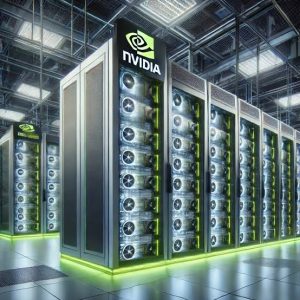
One of NVIDIA’s most important ideas is the concept of “AI factories.”
Traditional data centers were mainly designed for cloud storage, hosting, and web applications. AI factories are different.
These facilities are specifically optimized for artificial intelligence workloads.
AI factories are designed to:
- Train AI models faster
- Run AI systems continuously
- Process massive datasets
- Support real-time AI applications
Major cloud providers are now investing billions of dollars into AI infrastructure powered largely by NVIDIA hardware and networking systems.
This has created massive demand for NVIDIA GPUs worldwide.
NVIDIA’s Expansion Into Enterprise AI
NVIDIA is no longer just selling chips to technology companies.
The company is actively helping enterprises build their own AI ecosystems.
At GTC 2026, NVIDIA introduced enterprise AI agent platforms with support from companies including Adobe, Salesforce, Cisco, and SAP.
These AI agents can assist with:
- Customer support
- Workflow automation
- Data analysis
- Software development
- Business operations
This strategy positions NVIDIA as more than a chipmaker.
It is becoming a full AI infrastructure and enterprise platform provider.
Robotics Could Become NVIDIA’s Next Major Growth Market
Another industry where NVIDIA is investing aggressively is robotics.
The company believes artificial intelligence will increasingly move beyond software into physical machines.
This includes:
- Warehouse robots
- Manufacturing automation
- Smart factories
- Autonomous industrial systems
Robots require extremely fast real-time computing because they must understand and respond to their environments instantly.
They rely on AI for:
- Vision processing
- Navigation
- Decision-making
- Motion control
NVIDIA’s hardware and software ecosystem gives robotics companies powerful tools to build advanced autonomous systems more efficiently.
Many analysts believe robotics could become one of NVIDIA’s largest long-term opportunities.
NVIDIA and Autonomous Vehicles
Self-driving technology is another major opportunity for NVIDIA.
The company provides AI platforms for autonomous vehicles through its NVIDIA Drive and Hyperion systems.
These systems help vehicles:
- Detect surroundings
- Process sensor information
- Make driving decisions
- Improve passenger safety
Several automotive companies are already partnering with NVIDIA, including Mercedes-Benz and Lucid Motors.
As autonomous driving technology improves over the next decade, NVIDIA could become one of the leading technology suppliers for the automotive industry.
Massive Financial Growth
NVIDIA’s financial growth during the AI boom has been extraordinary.
The company became one of the world’s most valuable technology businesses as demand for AI hardware exploded globally.
Today, almost every major industry wants AI capabilities.
This includes:
- Cloud computing companies
- Governments
- Research institutions
- Startups
- Enterprise businesses
As a result, demand for NVIDIA AI chips and infrastructure continues reaching record levels.
Can Competitors Catch NVIDIA?
AMD
AMD is aggressively expanding its AI accelerator business and data-center offerings.
The company has made progress, especially in cloud computing and enterprise partnerships.
However, NVIDIA still maintains a stronger developer ecosystem and larger AI customer base.
Intel
Intel is rebuilding its AI strategy through new hardware investments and manufacturing improvements.
Despite those efforts, Intel still faces challenges competing in high-performance AI computing.
Google developed its own Tensor Processing Units (TPUs) for internal AI systems like Gemini.
While TPUs are highly capable, NVIDIA GPUs remain the preferred choice for many enterprises and AI researchers worldwide.
Amazon
Amazon has also developed custom AI chips to reduce dependence on NVIDIA hardware.
Even so, NVIDIA remains the industry standard for large-scale AI training and deployment.
Why Developers Continue Trusting NVIDIA
One reason NVIDIA stays ahead is because it provides a complete AI ecosystem.
The company offers:
- GPUs
- AI frameworks
- Networking systems
- Developer tools
- Cloud integrations
- AI software platforms
This simplifies AI development for businesses.
Instead of combining multiple hardware and software vendors, enterprises can build AI infrastructure using NVIDIA’s integrated ecosystem.
Challenges NVIDIA Still Faces
- Increasing competition from custom AI chips
- Export restrictions on advanced processors
- High energy consumption in AI data centers
- Supply chain and manufacturing pressure
Even with these challenges, NVIDIA still maintains a strong lead in AI infrastructure and developer adoption.
Real-World Examples of NVIDIA AI Technology
AI Models and Chatbots
Large AI systems rely heavily on GPU infrastructure for training and inference.
Smart Factories
Manufacturers use NVIDIA-powered systems for automation, robotics, and quality control.
Healthcare
Hospitals and researchers use AI systems powered by NVIDIA for medical imaging and disease detection.
Autonomous Vehicles
Self-driving systems process massive amounts of sensor data using NVIDIA AI platforms.
The Future of NVIDIA
NVIDIA’s future appears incredibly strong as artificial intelligence expands across industries worldwide.
The company is no longer simply a GPU manufacturer.
It is becoming foundational infrastructure for:
- Artificial intelligence
- Robotics
- Enterprise automation
- Autonomous systems
- Advanced computing
As AI becomes increasingly important to businesses and governments, NVIDIA’s influence will likely continue growing.
Many technology experts now view NVIDIA as one of the most important companies shaping the future of computing.
Final Thoughts
NVIDIA’s leadership in artificial intelligence did not happen by accident.
The company invested early, built powerful GPU technology, created strong developer ecosystems, and expanded into AI infrastructure before most competitors fully recognized the opportunity.
Today, NVIDIA powers many of the world’s most advanced AI systems across cloud computing, robotics, enterprise software, healthcare, and autonomous vehicles.
Although competitors continue improving rapidly, NVIDIA still leads in performance, software adoption, ecosystem strength, and market influence.
The AI revolution is still in its early stages, and if current trends continue, NVIDIA may remain one of the biggest winners of the global technology industry for years to come.
FAQ
Why is NVIDIA important for AI?
NVIDIA develops GPUs, AI software, and infrastructure used to train and run modern artificial intelligence systems.
What is CUDA?
CUDA is NVIDIA’s software platform that allows developers to use GPUs for AI, machine learning, and high-performance computing.
Does ChatGPT use NVIDIA hardware?
Many advanced AI systems are trained using NVIDIA GPU infrastructure.
Who are NVIDIA’s biggest competitors?
Major competitors include AMD, Intel, Google, and Amazon.
What are AI factories?
AI factories are specialized data centers built specifically for artificial intelligence workloads and large-scale AI model training.